Horse racing on the exchange: win, place, non-runners and in-running
The sport the exchange model was built on: many runners, a win market and a place market, non-runner reductions, and a two-minute in-running market that moves faster than any other
- Main market Win (one selection per runner)
- Deep on big race days in the last minutes before the off
- Slow all morning, then very fast in the final minutes and in-running
Information only. 18+. Nothing here says which side to be on. Real-money online gaming is restricted in India.
Overview
Horse racing is where betting exchanges began, and it still has their most distinctive markets. Every race has a Win market with a selection for each runner and a Place market that pays if a horse finishes in the first two, three or four. When a horse is withdrawn, the prices of the others are reduced by a published rule. Once the race starts, the in-running market lasts a couple of minutes and moves faster than anything else on an exchange.
A race market is a list of runners, each with a back price and a lay price. Backing a horse to win is simple; laying one is where many exchange users first meet a big liability, because a 20.0 outsider laid for a small stake risks nineteen times that stake. The Place market works the same way but settles on a horse finishing in the first few places; how many places depends on the number of runners and the rules of the market.
Non-runners matter more in racing than in any other sport. If a horse is withdrawn before the off, the chances of all the others improve, so matched bets on them are reduced by a published factor (the exchange's version of the bookmaker's Rule 4) and unmatched bets are usually cancelled. The factor depends on the price of the horse that was withdrawn: a withdrawn favourite reduces everyone else a lot, a withdrawn outsider hardly at all.
Exchanges also publish a starting price of their own, often called an exchange SP, worked out from the money in the market at the off rather than from on-course bookmakers. In-running betting, where the market stays open during the race, is available on some exchanges and is extraordinarily fast: a horse can go from 2.0 to 1.01 and back in the final furlong, and the pictures most people watch are seconds behind the people betting on course. winzap.vip lists Racing on its exchange menu at the time of writing.
Everything on this page is information only. Winzap Click does not run any market, take any bets or hold any money. Real-money online gaming is restricted in India and the Promotion and Regulation of Online Gaming Act, 2025 prohibits online money games: see our lesson on the law first, and you must be 18 or older.
- Main markets
- Win: which horse wins. Place: which horses finish in the first two, three or four, depending on the field size and the market rules
- Non-runners
- A withdrawn horse triggers a reduction factor on the matched bets of the other runners; unmatched bets are usually cancelled
- Exchange SP
- A starting price worked out by the exchange from the money in its own market at the off
- In-running
- Some exchanges keep the market open during the race. Prices move in seconds and the pictures are behind the course
- Where it is offered
- winzap.vip lists Racing on its exchange menu at the time of writing
Reading a Horse racing market in practice
Before the race
- 1Open the Win market. Each runner is a selection with a back and a lay price, and the matched amount tells you how busy the market is. Most of the money arrives in the last ten minutes before the off.
- 2Read the place terms if you use the Place market: how many places are paid and what happens if the field shrinks below the number that triggers a change.
- 3Check for non-runners. If a horse is withdrawn, look at the reduction factor that was applied to any bets you already had matched.
At the off and in-running
- 1The pre-race market is suspended at the off. If the exchange offers in-running betting, a new, faster market opens with a longer delay on bets.
- 2In-running prices move in fractions of a second. A bet placed from a television picture is placed late; the people on course and on the fastest feeds have already moved the price.
- 3After the race the market settles on the official result, including any stewards' decision that changes the placings.
The markets
| Market | What it means | Example | Notes |
|---|---|---|---|
| Win | Which horse wins the race | Favourite 3.0, second favourite 4.5, outsiders 20 and up | One selection per runner; the main market |
| Place | Which horses finish in the first two, three or four places | Favourite 1.50 to place in a field of 12 | Number of places depends on the field size and the market rules |
| To Be Placed (each-way equivalent) | There is no each-way bet on an exchange; a win bet plus a place bet on the same horse does the same job | Back to win at 6.0 and to place at 2.2 | Two separate bets with two separate results |
| Exchange SP | Bet at whatever starting price the exchange calculates at the off | SP bet with a limit of 4.0 | Offered on some exchanges; you can set a minimum (back) or maximum (lay) price |
| Forecast / Reverse Forecast | The first two home in order, or in either order | Favourite over second favourite at 9.0 | Offered on some exchanges; thin liquidity |
| Ante-post (future races) | A big race weeks or months away | Twenty runners, favourite 5.0 | A horse that does not run is usually a loser, not a void; read the rules |
Which of these markets exist, how many places are paid, and whether a race is offered in-running is decided by each exchange. The examples are made up to show the shape of a price, not real quotes.
Tips for reading it sensibly
Work out the liability before you lay an outsider. A ₹200 lay at 30.0 risks ₹5,800.
Expect the market to be empty until shortly before the off. A price at breakfast time may be a single offer that vanishes.
Understand reduction factors before a withdrawal happens, not after. The factor is published with the market.
In-running betting from television pictures is betting on the past. The price you see has already been traded by people who are seconds ahead.
An ante-post bet on a horse that does not run is usually lost, not refunded. Read the rules.
Nobody can predict a race. Treat any bet as paid entertainment, and only with money you can afford to lose.
Common myths
Myth A horse at 1.05 in-running has won.
Truth 1.05 means the market still gives the rest about a 5% chance, and in-running prices are set by people watching the race live. Horses fall at the last, get caught on the line and get disqualified.
Myth Laying outsiders is a steady income because outsiders rarely win.
Truth Rarely is not never, and a 40.0 shot that wins once wipes out thirty-nine small wins. The liability on a lay at high odds is the whole point of the price.
Myth The exchange SP is the same as the bookmaker SP.
Truth They are calculated differently and can be some way apart. The exchange SP comes from the money in the exchange market at the off.
Words you will see
- Win market
- The market on which horse wins. One selection per runner.
- Place market
- The market on a horse finishing in the first two, three or four, depending on the field size and rules.
- Non-runner
- A horse withdrawn before the race. Triggers reductions on the other runners' matched bets.
- Reduction factor
- The published percentage by which matched bets on the remaining runners are reduced when a horse is withdrawn.
- Exchange SP
- A starting price calculated by the exchange from the money in its own market at the off.
- In-running
- Betting while the race is being run. Very fast and offered only on some exchanges.
- Ante-post
- A market on a race that is weeks or months away.
Horse racing FAQ
Can I bet each-way on an exchange?
Not as a single bet. An each-way bet is a bookmaker product. On an exchange you place two separate bets, one in the Win market and one in the Place market. Each settles on its own, and the two prices are set by the market, not by a fixed fraction of the win odds.
What happens to my bet if a horse is withdrawn?
If your bet is on the withdrawn horse it is void. If your bet is matched on another horse, its odds are reduced by the published reduction factor for the withdrawn horse. Unmatched bets are usually cancelled when a non-runner is declared, so check whether yours is still there.
What is the exchange SP?
A starting price that the exchange works out from the back and lay money in its own market at the moment the race starts. It is different from the industry SP returned by on-course bookmakers. Some exchanges let you bet at SP with a limit price.
Is real-money horse race betting legal in India?
Horse racing has a particular history in Indian law, but online betting for money is gambling, which is restricted across India, and the Promotion and Regulation of Online Gaming Act, 2025 prohibits online money games. This site is information only and is not legal advice: check the law where you live.
Other sports
More markets explained
Cricket
The busiest exchange sport in India: a two-way match-odds market that moves ball by ball, plus tied-match, innings-runs and series markets
Read the markets
Football
The draw is a selection of its own, goals move the whole market at once, and the quiet minutes between them are where prices drift
Read the markets
Tennis
No draw, a price that swings with every break of serve, matches every day of the year, and a retirement rule that decides whether your bet stands
Read the markets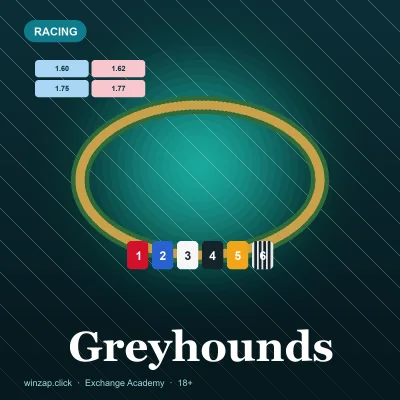
Greyhounds
Races every few minutes, a six-runner win market, prices that form in the last minute and a race that is over in half of one
Read the markets
Basketball
High scores, swinging momentum, overtime counted in the result, and a final two minutes of fouls that can move a price more than the previous forty-six
Read the markets
Related to winzap.vip
Winzap Click is a companion information site of winzap.vip, the Winzap brand website, whose menu lists an Exchange with back and lay betting, in-play markets and cash out. We explain how exchange betting works; the exchange itself, its markets, rules, commission and limits are on winzap.vip. Winzap Click does not offer markets, take bets or hold money. 18+ only; real-money online gaming is restricted in India, see our lesson on the law.